

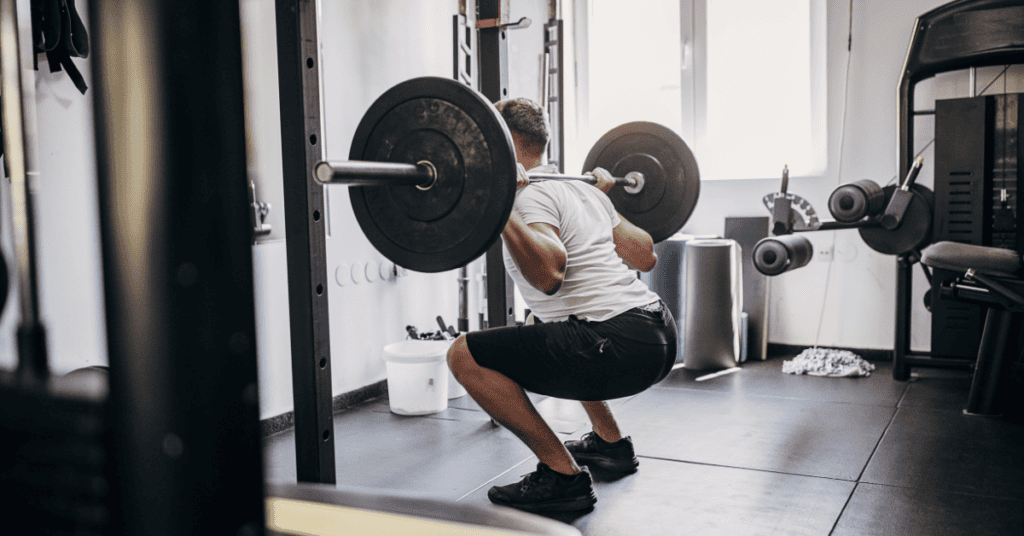
When you step under a loaded barbell, your feet are the only point of contact with the floor. Every ounce of force you generate during a heavy squat, deadlift, or clean starts from the ground up. If your foot mechanics are compromised by collapsing arches or instability, that power leaks before it ever reaches the bar, leading to stalled progress and a higher risk of injury. It is essential to understand how proper foot alignment dictates power transfer. By stabilizing your foundation, you can lift safer and more efficiently.
How Foot Mechanics Impact Your Squats, Deadlifts, and Olympic Lifts
The Role of the Foot Tripod in Lifting
Proper lifting technique relies heavily on the concept of the foot tripod. This involves maintaining equal weight distribution across three key points of the foot: the heel (calcaneus), the base of the big toe (first metatarsal head), and the base of the little toe (fifth metatarsal head). When these three points are actively rooted into the floor, they create a stable arch and a solid base of support. If any part of this tripod lifts or collapses during a heavy repetition, your body automatically shifts its center of gravity, which can throw off your entire lifting mechanics.
Force Distribution and Postural Alignment
Rooting the foot effectively does more than just keep you balanced; it aligns the entire kinetic chain. A stable foot posture ensures that your ankles, knees, and hips stack correctly under the load of the barbell. This optimal alignment allows for maximum force production, enabling you to drive vertically out of the bottom of a squat or pull smoothly from the floor during a deadlift. When foot mechanics fail, the body compensates, placing unintended stress on surrounding joints and connective tissues.
The Risks of Strength Training with Flat Feet or High Arches
Knee Cave (Valgus Collapse) Under Heavy Loads
Lifters with uncorrected flat feet often experience overpronation, where the arch collapses inward under heavy loads. This inward roll forces the tibia to rotate internally, which directly leads to knee valgus, commonly known as knee cave. When your knees collapse inward during a heavy squat or clean, it places immense shear stress on the knee ligaments and reduces your ability to generate upward force.
Lower Back Strain and Pelvic Tilt
Foot instability does not just affect the lower legs; it travels up the kinetic chain to the pelvis and spine. Collapsing arches can cause an anterior pelvic tilt, which exaggerates the curve of the lower back and places dangerous shear force on the lumbar spine during deadlifts and squats. In our fifteen years of clinical practice, we have seen how uncorrected foot mechanics contribute to chronic back issues. With over ten thousand spinal adjustments performed and years of experience treating chronic back pain, our team understands that protecting the spine starts with stabilizing the feet.
Plantar Fasciitis and Arch Pain in the Gym
High-volume strength training, especially in mixed-modal sports, places repetitive stress on the plantar fascia. Box jumps, double-unders, and explosive Olympic lifts require the foot to absorb significant shock. For athletes with high, rigid arches or flat, hypermobile feet, this repetitive loading can quickly lead to inflammation, arch pain, and debilitating plantar fasciitis, side-lining them from their training programs.
Custom Orthotics vs. Over-the-Counter Insoles for Barbell Sports
Why Soft Running Insoles Fail Under the Barbell
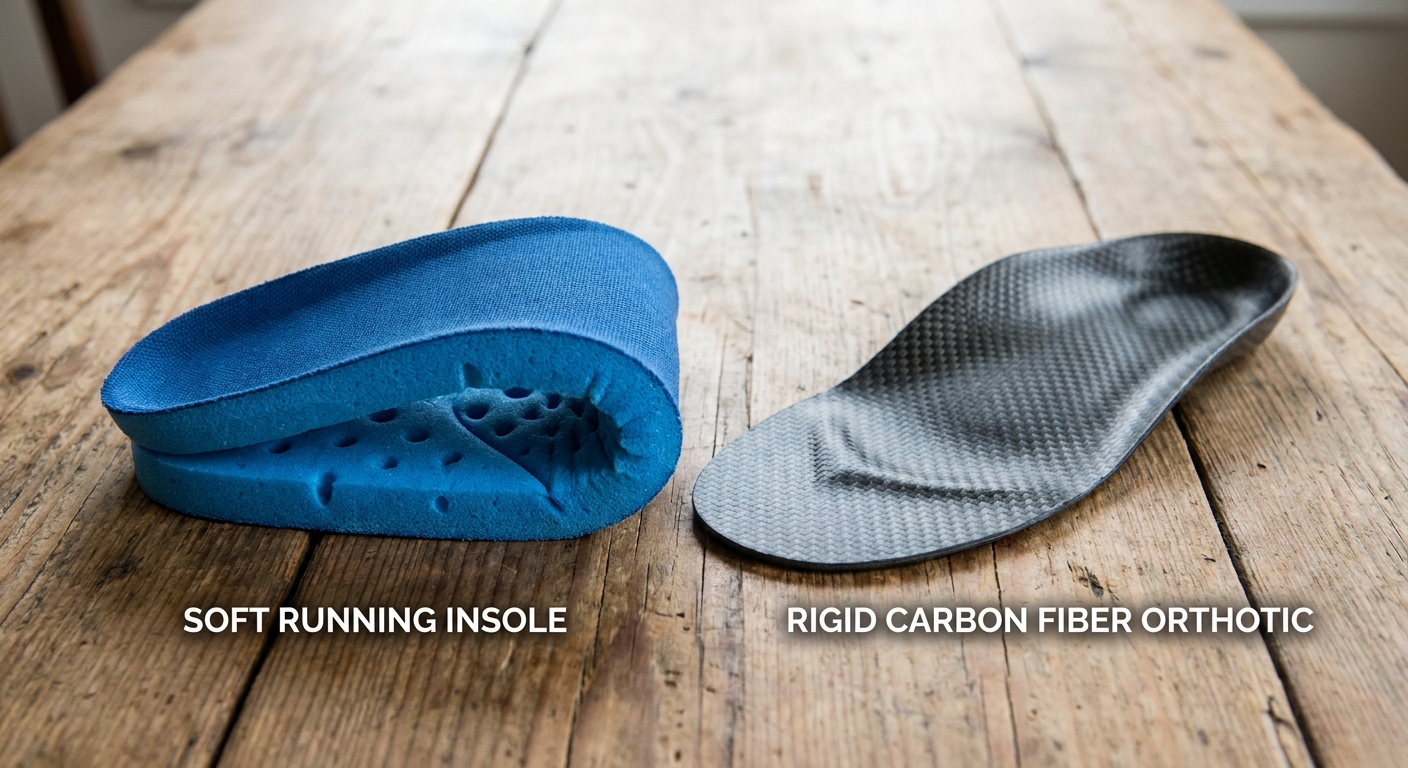
Many gym-goers make the mistake of placing soft, gel-based running insoles into their weightlifting shoes. While these inserts feel comfortable during a light jog, they are disastrous under a barbell. A soft insole compresses unevenly under heavy loads, creating a squishy, unstable surface. This compression absorbs the force you are trying to push into the floor, reducing your power output and creating micro-instabilities in your ankles.
The Performance Benefits of Custom-Molded Devices
Unlike generic inserts, custom-molded orthotics are designed to hold their shape under extreme pressure. Our lead doctor of chiropractic, who has received specialized training in sports rehabilitation and maintains a dedication to ongoing education in advanced kinesiology techniques, emphasizes that custom devices support the exact contours of your foot. We prioritize evidence-based treatments and believe in treating the root cause of pain rather than just the symptoms. A custom orthotic addresses the specific biomechanical fault in your stance, providing a rigid platform that enhances power transfer rather than dampening it.
Key Features of a Weightlifting Orthotic: Rigidity, Heel Stability, and Low Profile
Non-Compressible Materials for Maximum Power Transfer
A true weightlifting orthotic must be constructed from non-compressible materials, such as rigid polypropylene or carbon fiber. These materials do not pack down or lose their shape when subjected to heavy loads. By maintaining their structural integrity, they ensure that the force you exert against the floor is transferred directly into moving the barbell.
Deep Heel Cups for Lateral Stability
Lateral stability is crucial when stepping out of a squat rack or setting your stance for a sumo deadlift. High-quality weightlifting orthotics feature deep heel cups that lock the calcaneus (heel bone) in place. This prevents the heel from shifting side-to-side inside the shoe, ensuring that your ankle remains perfectly stacked over your midfoot throughout the entire range of motion.
Will Custom Orthotics Fit Inside Flat CrossFit and Weightlifting Shoes?
Managing Shoe Volume and Stack Height
One of the primary concerns for lifters is whether an orthotic will fit inside their specialized footwear. Flat trainers typically have a very low internal volume. A properly designed weightlifting orthotic is engineered with a low profile, ensuring it provides essential arch and heel support without taking up too much space or crowding the top of the foot against the shoe upper.
Compatibility with Olympic Lifting Shoes vs. Flat Trainers
Olympic weightlifting shoes feature a hard, elevated heel wedge designed to increase ankle dorsiflexion. When fitting an orthotic into an Olympic shoe, the device must be thin enough so that it does not unnecessarily add to the stack height and alter the carefully engineered angle of the shoe. Conversely, in flat zero-drop trainers, the orthotic acts as the primary source of structured support, requiring a precise fit to prevent the foot from sliding during explosive movements.
How to Gradually Break In Your Custom Orthotics at the Gym
Starting with Lighter Loads and Warm-Ups
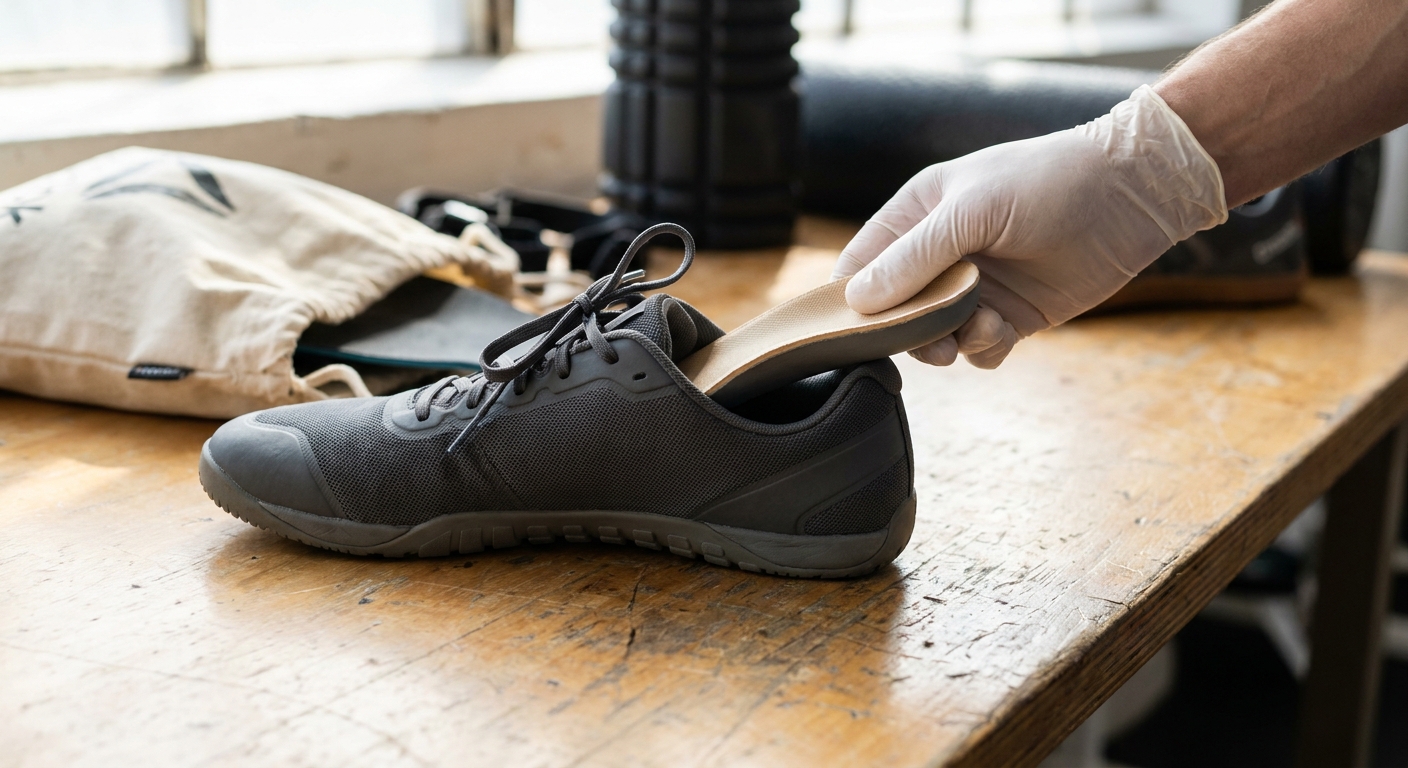
Transitioning to custom orthotics changes the way your foot muscles and lower legs engage. It is vital not to attempt a one-rep max on your first day wearing them. Begin by wearing your new orthotics during your warm-up sets and lighter accessory work. Gradually increasing the load over a period of two to three weeks allows your neuromuscular system to adapt to the corrected alignment safely.
Monitoring Foot Fatigue During the Adaptation Period
As your feet adjust to the new support, you may experience mild fatigue in your arches or calves. This is a normal part of the adaptation process as previously underutilized muscles begin to work correctly. We value compassionate communication during every session, ensuring that if you experience discomfort, we take the time to listen. We always ensure our patients have their diagnosis and adaptation process explained to them in plain language, eliminating any confusion about what to expect.
When to Skip the Orthotics: Barefoot Lifting and Accessory Movements
Open Kinetic Chain Exercises
While orthotics are incredibly beneficial for closed kinetic chain exercises where your feet are anchored to the floor, they are not always necessary for every movement. For open kinetic chain exercises, such as seated leg extensions, hamstring curls, or pull-ups, your feet are not bearing weight or transferring force from the ground. In these instances, the presence of an orthotic does not impact your biomechanics.
Specific Barefoot Training Protocols
Some strength programs incorporate specific barefoot warm-ups or accessory movements to strengthen the intrinsic muscles of the foot. Performing light, controlled exercises without shoes can help improve proprioception and foot strength. We support a balanced approach to training, recognizing that while orthotics provide essential stability under heavy loads, targeted barefoot protocols can play a role in a well-rounded athletic development program.
How to Get a Professional Assessment for Custom Weightlifting Orthotics
What to Expect During a Biomechanical Evaluation
Taking the guesswork out of your foot health begins with a structured, professional evaluation. We walk our patients through a clear four-step process so they know exactly what to expect:
- Initial comprehensive postural assessment: Evaluating your stance and kinetic chain.
- Personalized treatment plan creation: Tailoring a strategy to your specific lifting needs.
- Active physiotherapy or chiropractic adjustment sessions: Emphasizing hands-on therapy rather than just using machines.
- Take-home kinesiology exercise program: Providing targeted movements for long-term maintenance.
We respect your time, taking specific steps to ensure patients are seen on time and never feel rushed during their appointments.
Taking the Next Step in Your Lifting Journey
If foot pain or instability is holding back your strength gains, it is time to seek expert guidance.We understand that stepping into a new clinic can be daunting, which is why we are fully transparent. We maintain a pristine clinic environment, ensuring the strict sanitization of treatment tables between appointments and the absolute cleanliness of the gym equipment. With flexible scheduling available, we invite you to schedule your initial consultation today to take the first step toward a pain-free life and stronger, safer lifts.