

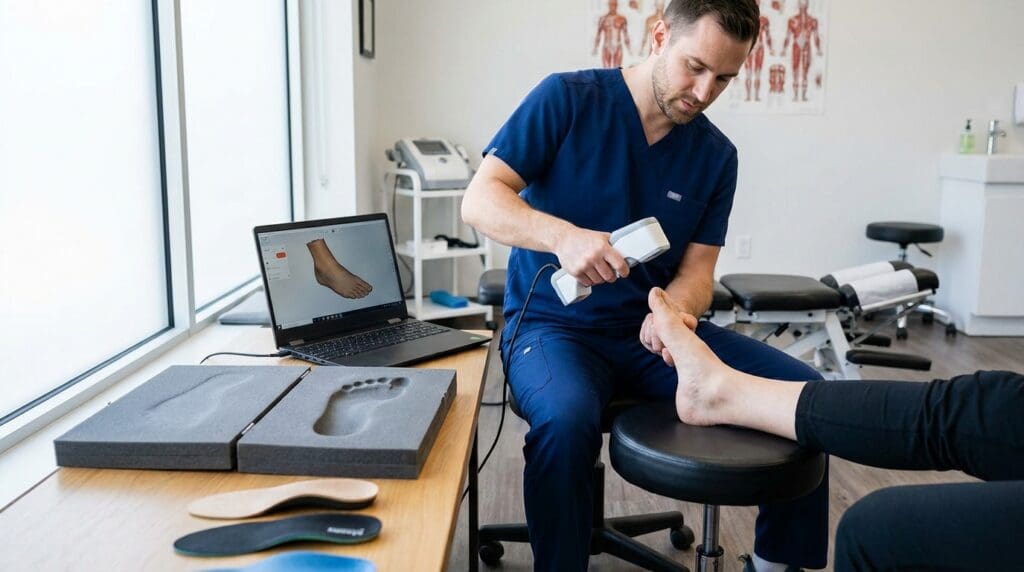
The foundation of any effective biomechanical intervention begins with an accurate capture of the foot’s unique architecture. When patients experience chronic foot, knee, or back pain, the structural alignment of their lower extremities is often the root cause. To correct these imbalances, practitioners rely on precise physical or digital models of the feet to fabricate supportive devices. For anyone researching their healthcare options, comparing foam casts vs. 3D scanning is essential for making an informed decision about your recovery.
In our fifteen years of clinical practice, we have seen firsthand how the accuracy of a foot mold dictates the success of the final device. Whether you are dealing with plantar fasciitis or chronic joint discomfort, the method used to capture your foot morphology plays a critical role in your treatment outcome. By exploring the differences between traditional casting and modern digital scanning, patients can better understand what to expect during their visit and how advanced technology is elevating the standard of care.
Understanding the Custom Orthotics Fitting Process
Creating a truly custom orthotic is a highly involved process that requires far more than simply stepping on a generic pressure pad. The journey begins with a precise three-dimensional capture of the foot, which serves as the blueprint for the final device. This blueprint must accurately reflect the anatomical contours and functional posture of the foot to ensure the resulting orthotic provides proper biomechanical support. A flawed mold will inevitably lead to a flawed device, which is why the fitting process is the most critical step in treating the root cause of pain rather than just the symptoms.
Our comprehensive four-step patient care journey is designed to ensure maximum accuracy and comfort from day one. It starts with an initial comprehensive postural assessment, followed by a personalized treatment plan creation. From there, patients participate in active chiropractic adjustment sessions, concluding with a take-home kinesiology exercise program for long-term maintenance. Throughout this process, we utilize evidence-based treatments and prioritize clear, compassionate communication so you always understand the necessity of your treatment.
The Traditional Approach: Foam Box Impressions and Plaster Cast
For decades, practitioners have relied on physical mediums to capture the shape of a patient’s foot. While technology has advanced, these traditional methods are still utilized in various clinical settings and form the historical foundation of orthotic manufacturing.
Capturing Foot Morphology with Foam Boxes
Foam impression casting involves a patient pressing their foot into a low-density polyurethane foam box. The clinician carefully guides the foot into the foam in a semi-weight-bearing position to capture the plantar contours in a functional posture. While this method is relatively quick, it requires the practitioner to have excellent manual control to ensure the foot does not shift into an improper alignment as it sinks into the material.
The Role of Plaster Slipper Casts
Plaster casting is often considered the traditional gold standard for capturing foot morphology. This non-weight-bearing technique involves wrapping wet plaster strips around the foot while holding the subtalar joint in a neutral position. Once the plaster hardens, it creates a negative slipper cast. Although highly accurate when performed correctly, plaster casting is notoriously messy and time-consuming, often taking up to fifteen minutes to complete and requiring extensive cleanup.
The Modern Alternative: How 3D Scanning Technology Works
As clinical standards evolve, digital technology has introduced cleaner, faster, and highly accurate alternatives to physical molds. 3D scanning represents a significant leap forward in orthotic fabrication, utilizing advanced optical sensors to capture the exact topography of the foot without the mess of plaster or foam.
Laser Triangulation and Structured Light Scanners
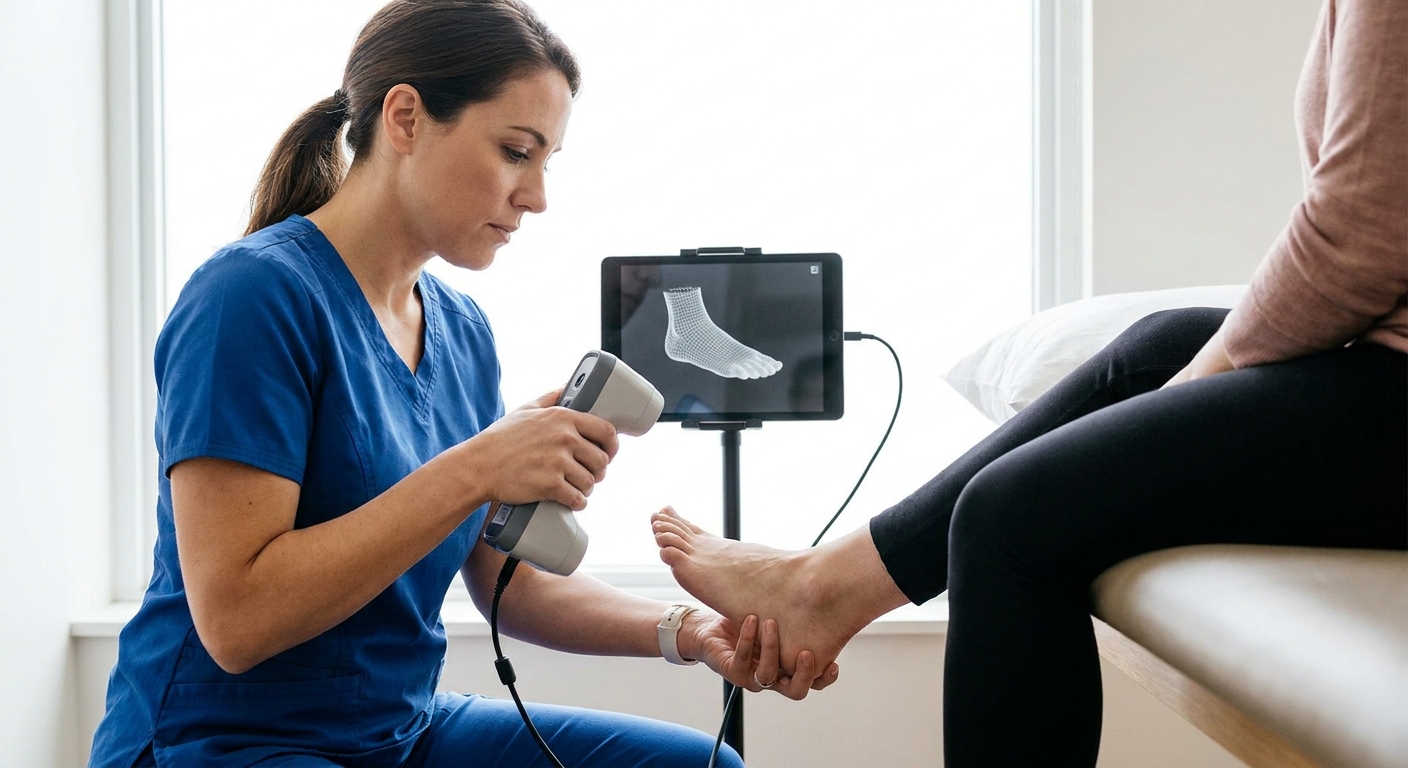
Modern clinical 3D scanners typically use either laser triangulation or structured light technology. Laser scanners project a red light onto the foot, measuring the distance to create a precise topographical map. Structured light scanners project a specific pattern of infrared or white light, calculating the foot’s 3D shape based on how the light pattern deforms over the anatomical contours. Both methods capture reliable, high-resolution data.
Generating an Instant Digital 3D Model
Unlike plaster, which must dry and harden, a 3D scanner generates an instant digital model of the foot in real-time. This process takes only a few minutes and is completely non-contact. The resulting digital file can be viewed immediately on a screen, allowing the practitioner to explain your diagnosis in plain language and show you exactly where biomechanical corrections will be made.
Evaluating Accuracy and Precision: Comparing the Exactness of Both Methods
When comparing foam casts and 3D scanning, precision is the ultimate deciding factor. A custom orthotic must support the foot exactly where needed, making micrometer-level accuracy a clinical priority.
Micrometer-Level Precision of Digital Scans
Clinical-grade 3D scanners are capable of capturing foot morphology with micrometer-level precision. This ensures that every contour, arch height, and structural nuance is recorded flawlessly. In our clinic, we are dedicated to 100 percent evidence-based treatment protocols. We know that the superior exactness of digital scanning translates directly into better patient outcomes, contributing to our ninety-eight percent patient satisfaction rate.
Physical Accuracy Limitations of Foam and Plaster
While plaster and foam can be accurate, they are subject to physical limitations. Plaster casts can shrink, crack, or warp as they dry. Foam boxes can be accidentally crushed or deformed if the patient twitches during the impression. Furthermore, physical molds must be shipped to a manufacturing lab, introducing the risk of damage or distortion during transit, which can compromise the integrity of the final orthotic.
Foot Posture and Positioning: Weight-Bearing vs. Non-Weight-Bearing
The position of the foot during the casting process is just as important as the material used to capture it. Different clinical philosophies dictate whether the foot should be bearing weight or suspended in the air during the impression.
Functional vs. Locked Neutral Positions
A non-weight-bearing position, often used with plaster casting, allows the practitioner to lock the midtarsal joint and hold the foot in a subtalar neutral position. This captures the foot in its ideal anatomical alignment without the collapsing influence of gravity. Conversely, semi-weight-bearing methods, like foam boxes, capture the foot in a more functional, load-bearing state.
How Scanning and Casting Capture Foot Posture
Advanced 3D scanners are versatile enough to capture the foot in non-weight-bearing, semi-weight-bearing, or full-weight-bearing positions.
Patient Comfort and the Clinical Experience
We understand that visiting a healthcare provider can sometimes be an anxious experience. Patients often arrive with emotional baggage from terrible experiences with other healthcare providers, such as feeling their pain was minimized or struggling to get an email reply regarding their rehabilitation exercises. We actively work to overcome these communication breakdowns by validating your pain and ensuring you feel completely safe and comfortable before we perform any physical adjustments or manual therapies.
Traditional plaster casting can be uncomfortable for patients who dislike the messy, wet sensation or who have difficulty holding their leg still for extended periods. 3D scanning eliminates these issues entirely. It is a fast, clean, non-contact procedure.
Logistics and Turnaround Time: Physical Molds vs. Digital Files
The logistical differences between physical casting and digital scanning significantly impact how quickly you receive your custom orthotics. When a foam box or plaster cast is used, the physical mold must be carefully packaged and shipped to an external manufacturing laboratory. This introduces transit delays and the potential for the mold to be lost or damaged in the mail.
Digital 3D scans bypass these logistical hurdles completely. The digital file is instantly and securely transmitted to the manufacturing facility with the click of a button. This immediate transfer drastically reduces turnaround time, allowing you to start your physical recovery sooner. We value efficiency and respect your time; we take specific steps to ensure patients are seen on time, never feel rushed during their appointments, and never experience delays in receiving their home exercise programs. This streamlined approach has been instrumental in helping over five hundred local athletes return to their sport after an injury.
Industry Standards: Acceptable vs. Unacceptable Foot Capture Methods
Not all foot capture methods are created equal. It is vital for patients to understand the difference between legitimate custom orthotic manufacturing and subpar methods that do not meet professional industry standards.
Recognizing Legitimate 3D Casting and Scanning
A legitimate 3D scan must capture a true volumetric, three-dimensional model of the foot. The technology must measure the actual depth, width, and contours of the plantar surface directly from the foot itself. We proudly demonstrate our professional qualifications, university degrees, and licensing credentials so you can be confident that our digital scanning methods meet the highest clinical standards for custom orthosis fabrication.
Avoiding Unacceptable 2D Techniques and Pressure Mats
Patients should be wary of clinics that use unacceptable methods to claim they are making custom orthotics. Two-dimensional pressure-sensitive mats, ink footprints, and single-aspect photographs are not true 3D captures. These systems use computer algorithms to guess or extrapolate the shape of the foot based on flat images or pressure points. We reassure patients who are skeptical about the effectiveness of treatments by strictly avoiding these 2D shortcuts, guaranteeing hands-on therapy and authentic 3D data collection that addresses the root cause of your pain.
Final Thoughts: Taking the Next Step for Your Foot Health
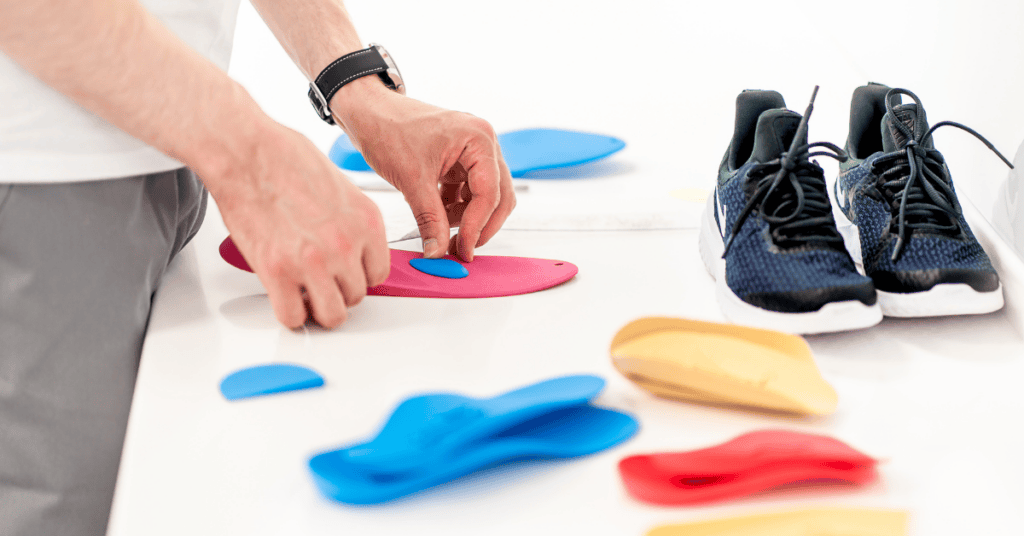
Choosing the right method for capturing your foot morphology is the first step toward lasting relief from chronic pain. While traditional foam boxes and plaster casts have paved the way for biomechanical support, modern 3D scanning offers unparalleled micrometer-level precision, faster turnaround times, and a vastly improved, mess-free patient experience. With over ten thousand spinal adjustments performed and a dedication to ongoing education, our team is equipped to provide the highest standard of care.
We believe in providing a clear timeline for recovery and reassuring guarantees so you never have to worry about committing to an uncertain treatment plan. If you are ready to address the root cause of your discomfort, schedule your initial consultation today to take the first step toward a pain-free life. We offer flexible scheduling and can provide you with all the information you need to direct bill your custom orthotics to your insurance provider.